Japan, Meiji period
Every piece, turned over.
We photograph the base, the marks and the faults as well as the best side, so you can check a piece the way a dealer would.We photograph the base, the marks and the faults as well.
- SideCloisonné enamel on copper, 40.5 cm across.
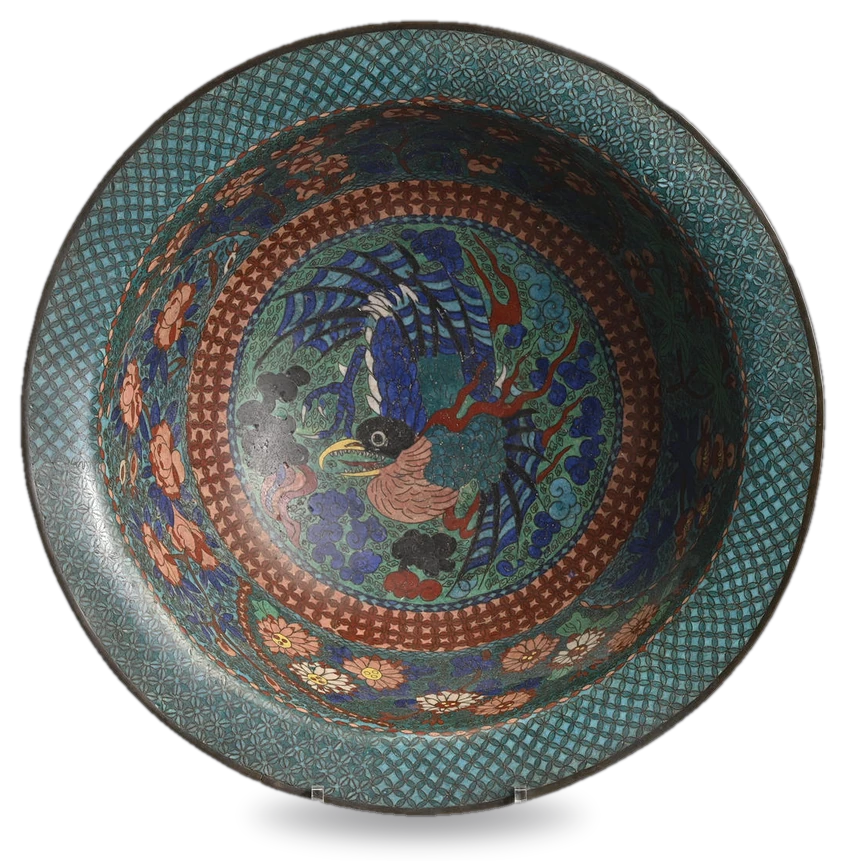
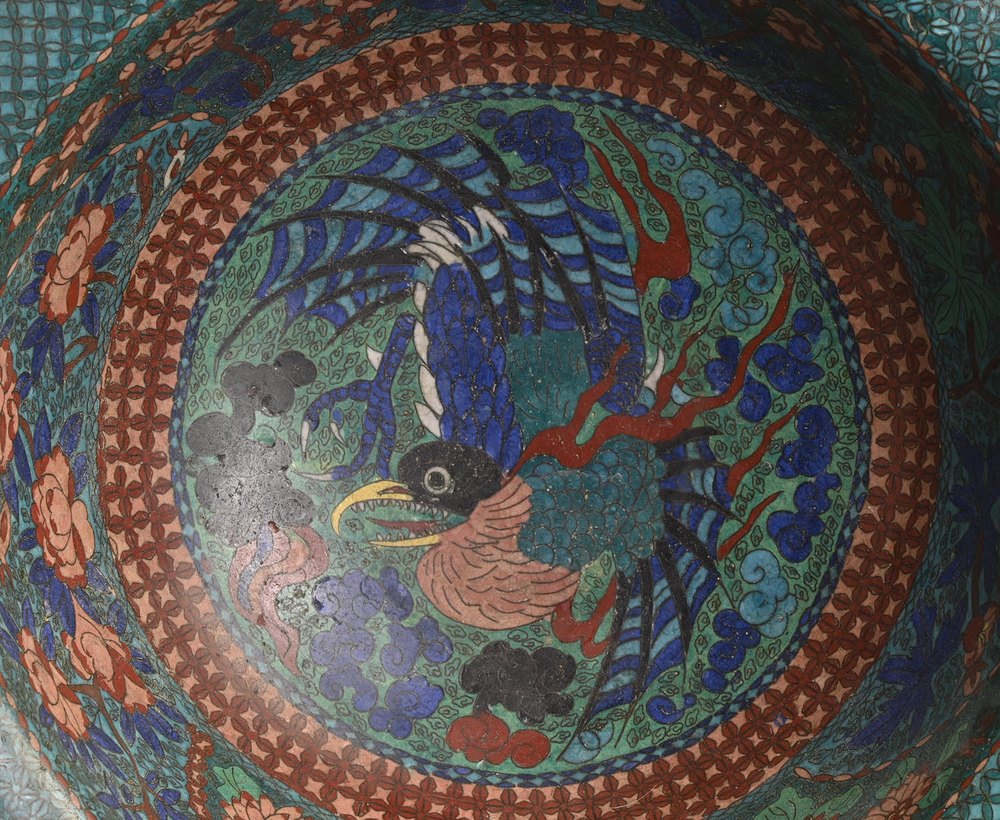
- InsideA phoenix among clouds and flowers, outlined in fine wire.
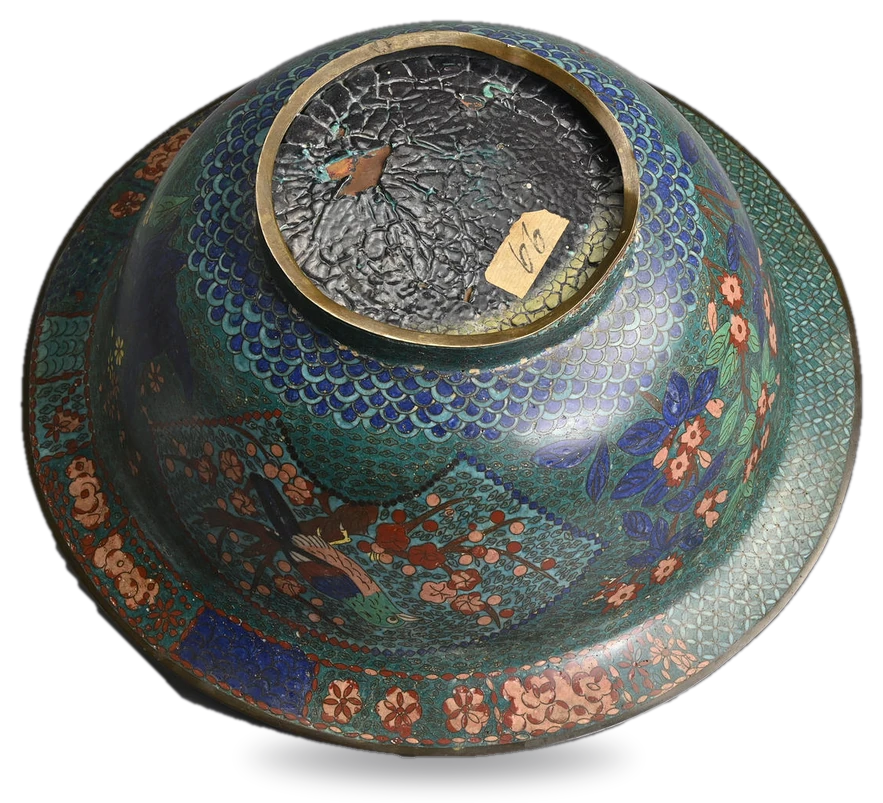
- BaseThe black enamel base, with its patch of enamel loss shown.
- PhoenixThe wirework and enamels, close enough to see.
£1,500Large Japanese cloisonné phoenix bowl
See this bowl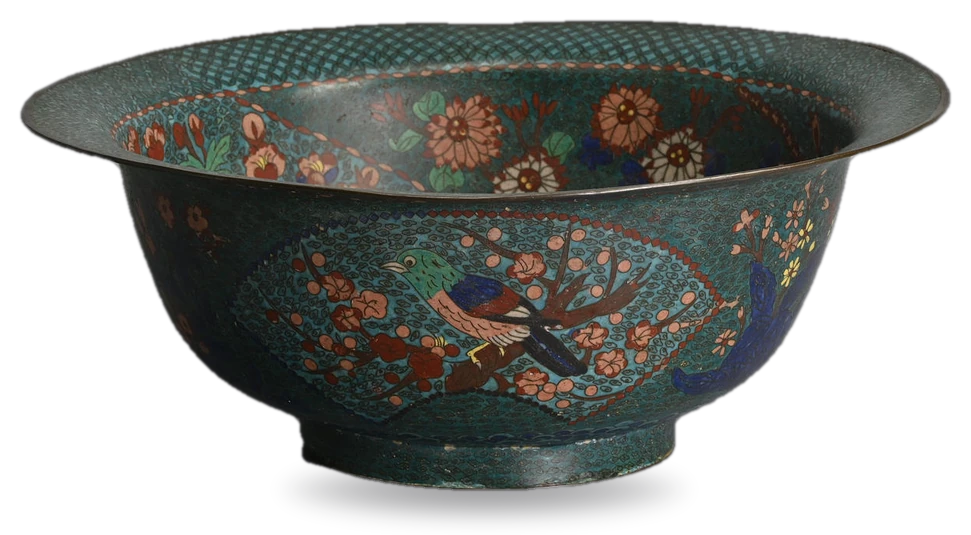
Scroll to turn it over
- Insured delivery from CardiffUK £15, Europe £35, worldwide £65
- Fourteen-day returnsChange your mind on any piece
- Shown as foundBases, marks and faults where we find them
- Secure card paymentCheckout by Stripe
The stock
Eight pieces in stock, each one of a kind.
Asian art, antiquities, bronze and paintings. Turn any piece over to see its base, back or marks.
- Asian artLarge Japanese cloisonné phoenix bowl£1,500Japan, Meiji period, 40.5 cm across
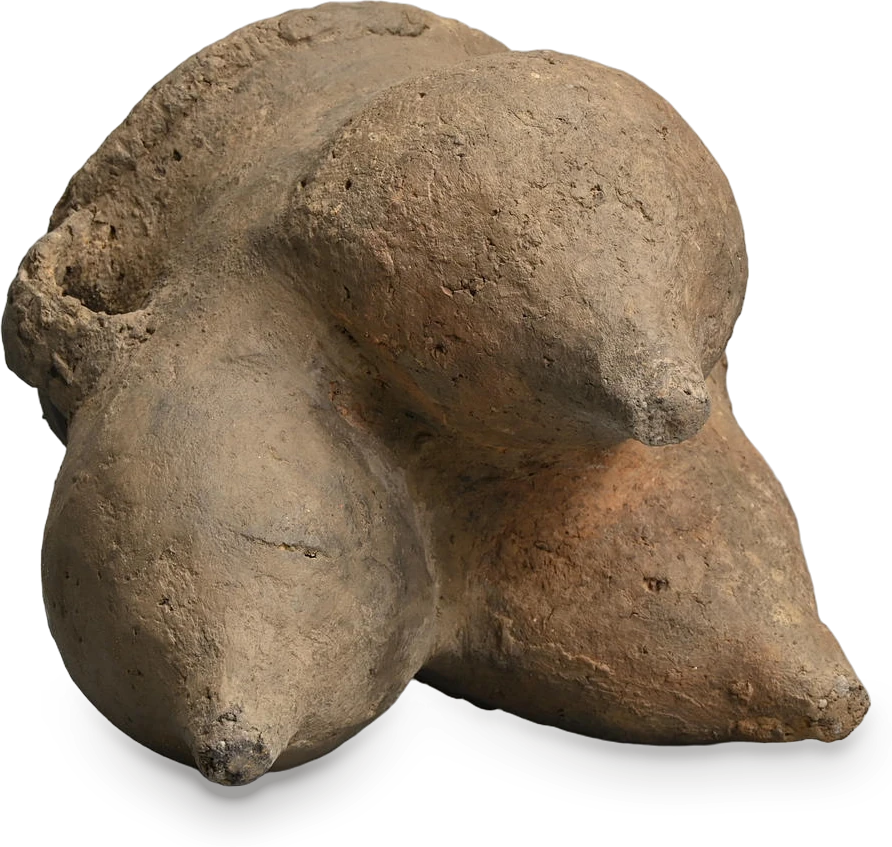
 AntiquitiesChinese pottery tripod (li)£630China, c. 2000-1000 BC, 15.5 cm high
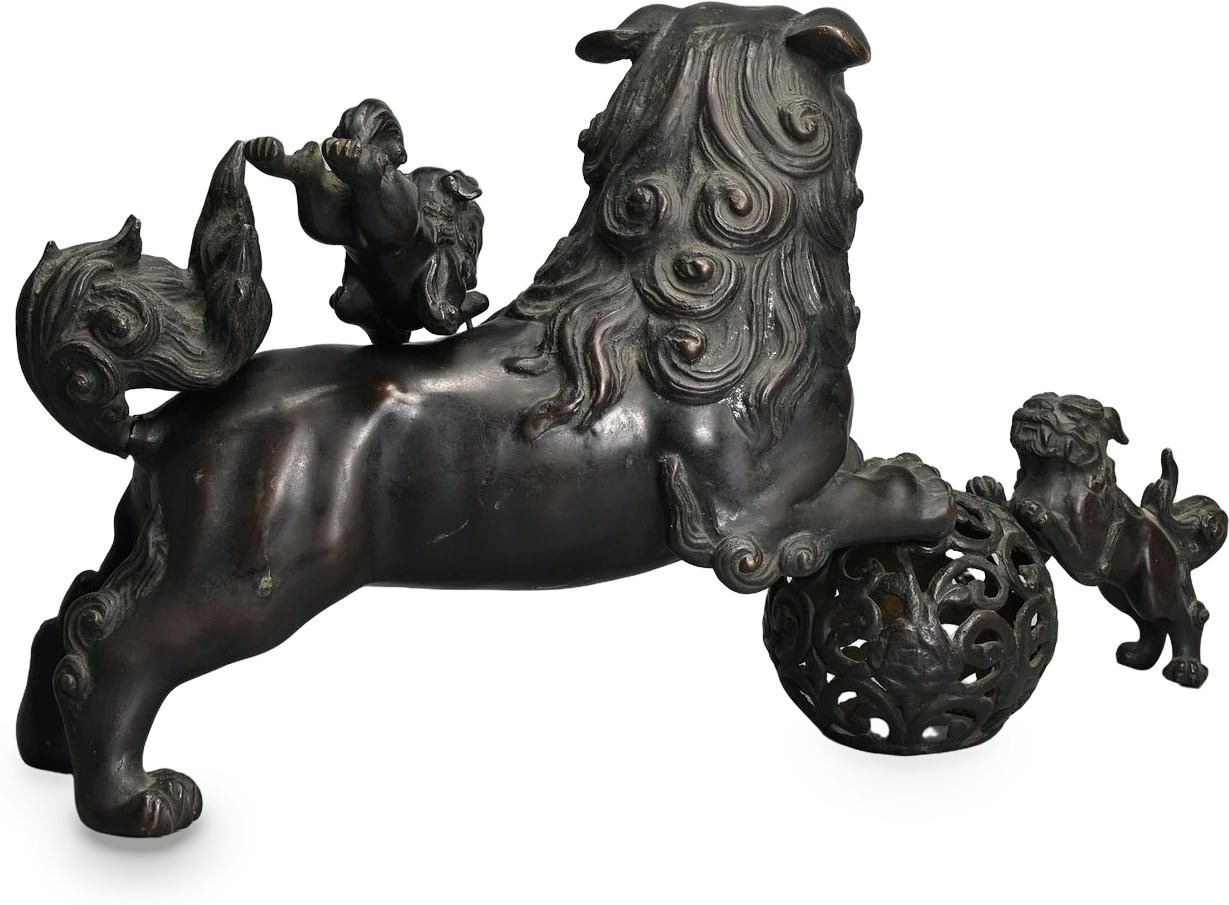
 BronzeBronze shishi group with cubs£510Probably Japan, 20th century, 36 cm long
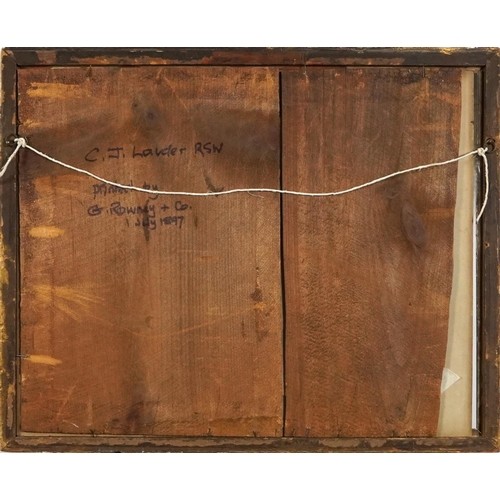
 PaintingsCharles James Lauder, Thames Embankment£427Scotland and England, c. 1890
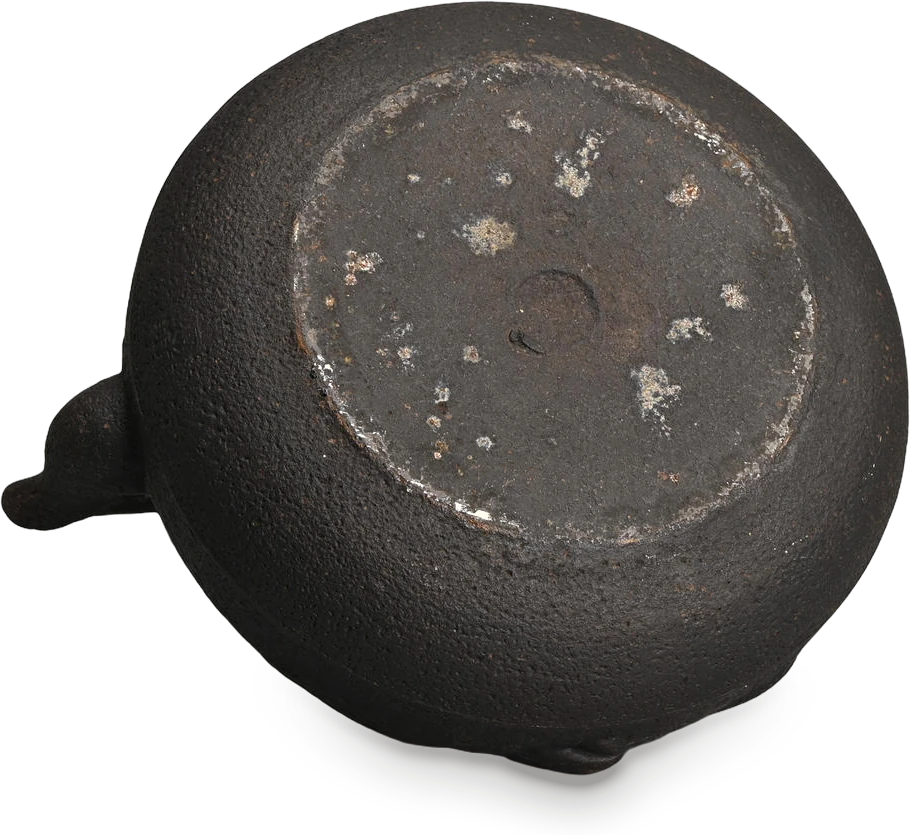
 Asian artIron tetsubin with seashells£180Japan, Meiji period, 21.5 cm high
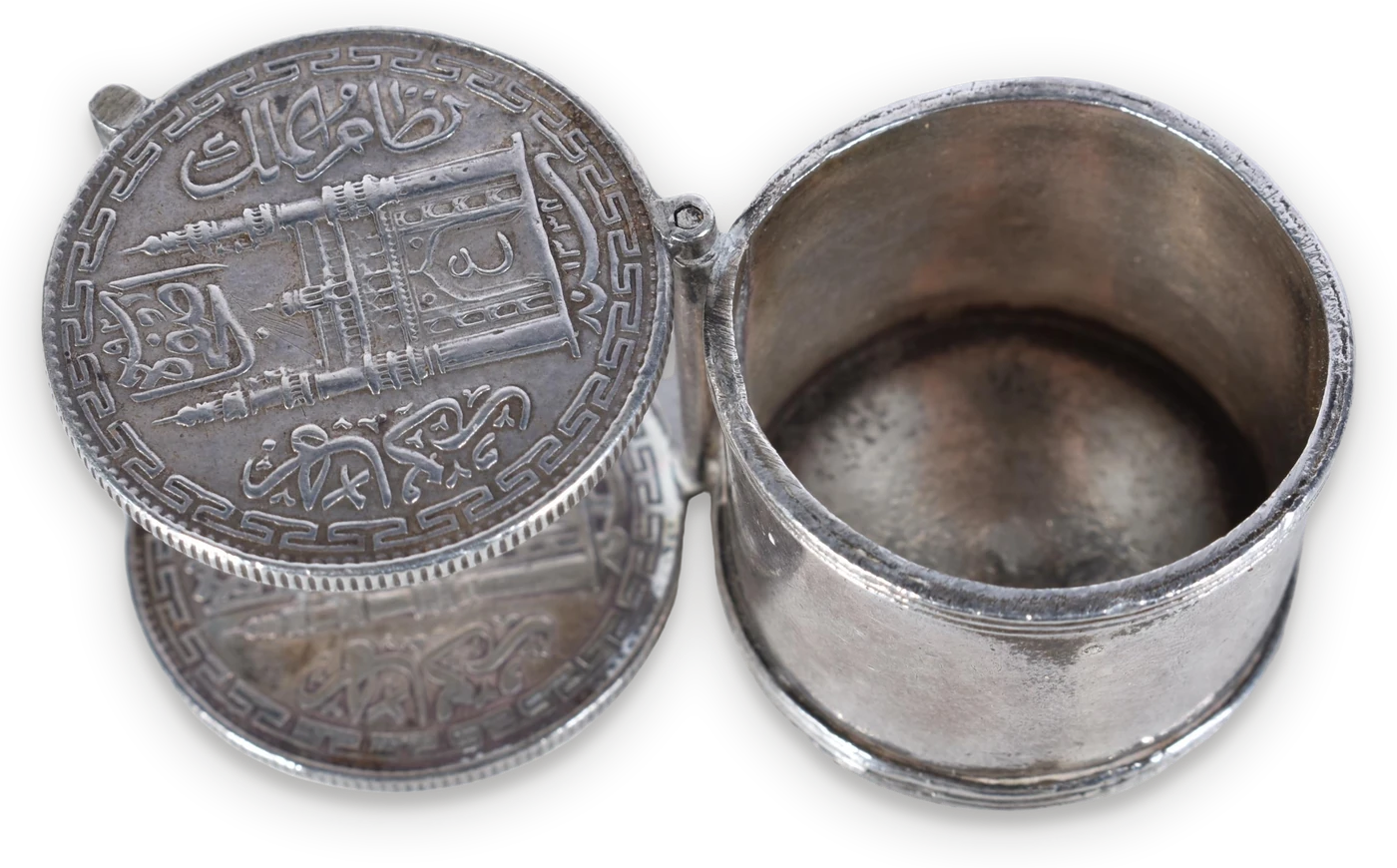
 Asian artHyderabad rupee coin box£145Probably India, 20th century, 3.3 cm
 Asian artShagreen trousse eating set£145Probably China, c. 1850-1920
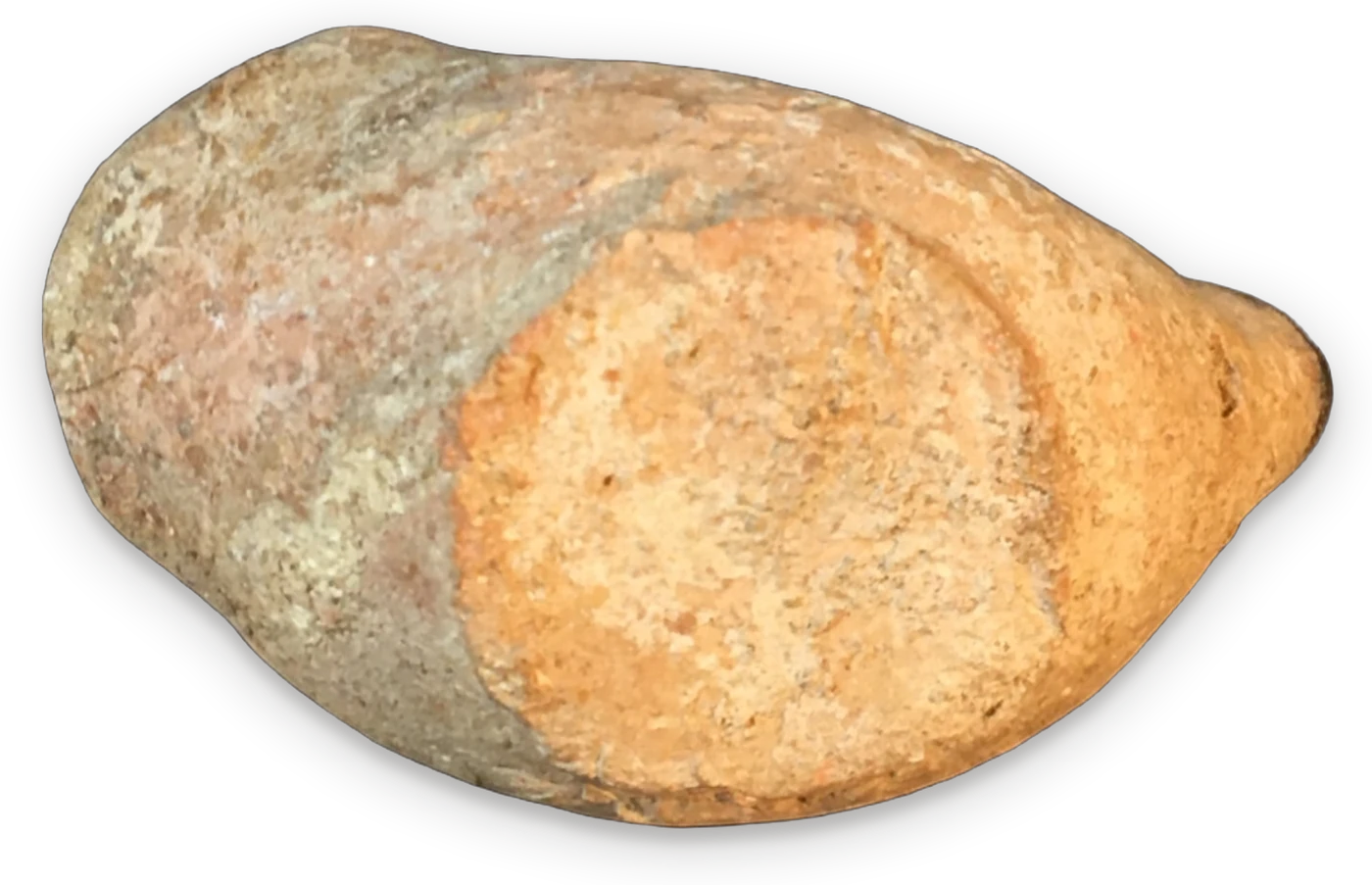
 AntiquitiesHoly Land pottery oil lamp£95Southern Levant, c. 1200-500 BC
How we describe
What a listing shows.
The best side sells a piece. The other sides tell you what you are buying, so we photograph those too.
The base
Bases are photographed as found. The phoenix bowl's base shows its black enamel, an old paper label and the patch where the enamel is lost.
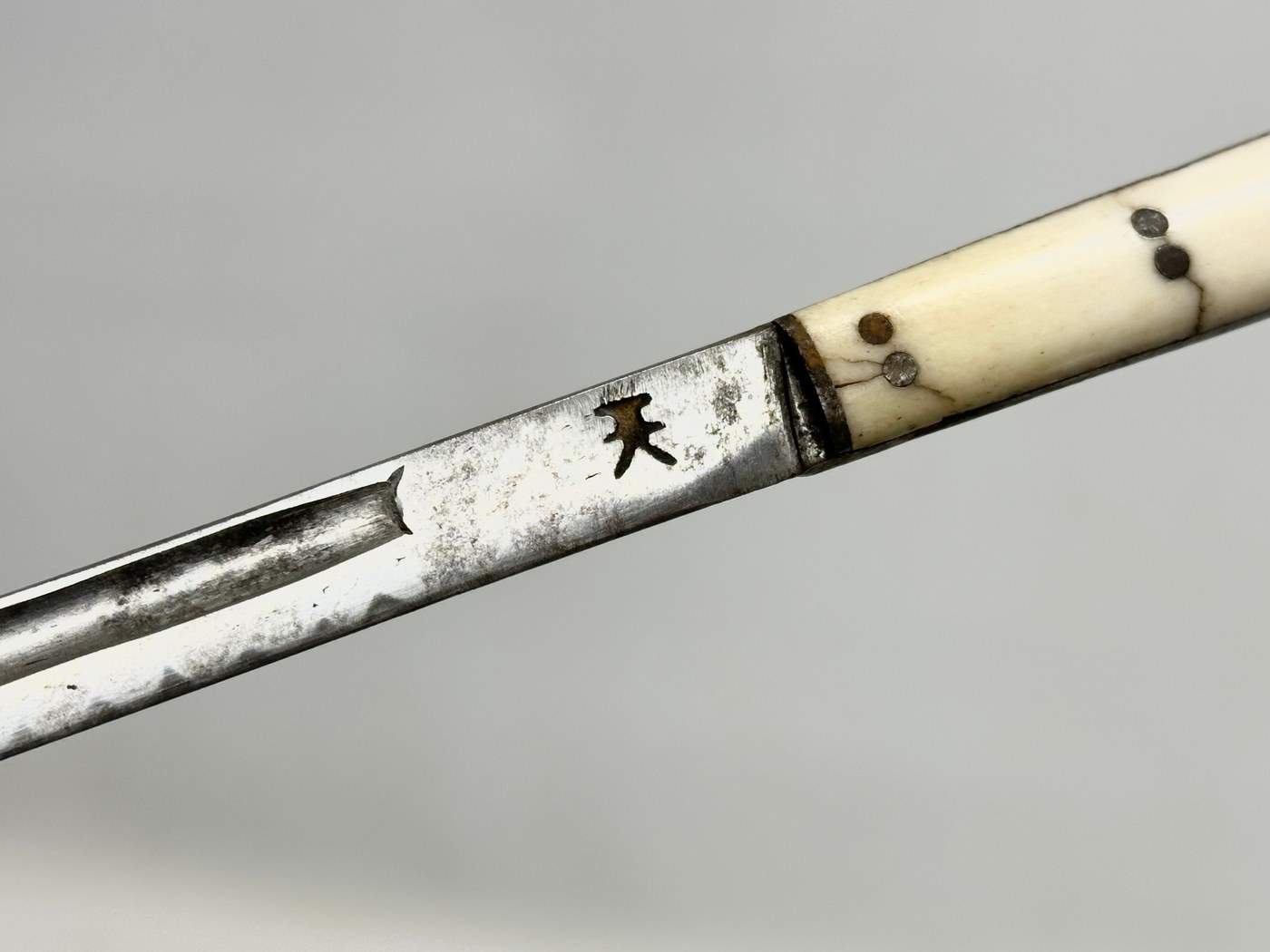
The marks
Marks are shown close enough to read. This character mark is struck on the knife of the shagreen eating set, near the collar.
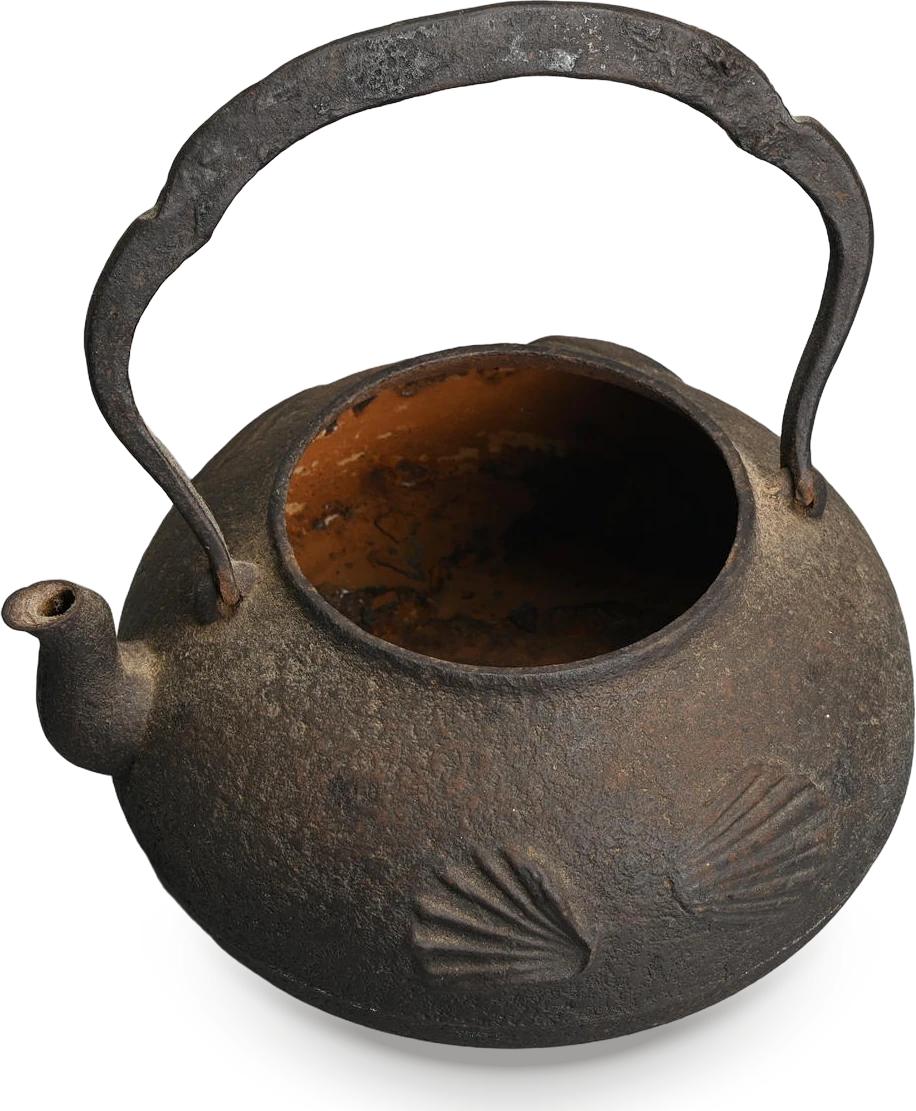
The faults
Faults are photographed, not hidden. The iron tetsubin is rusted and flaking inside, and both the photographs and the description say so.
Condition is described as we see it, and the repairs, cracks and losses we know of are put in writing.
How we describe a pieceThe Journal
Notes on collecting.
- Asian ArtJapanese Netsuke: Miniature Masterpieces of CarvingDiscover how functional toggles worn by Edo-period Japanese merchants transformed into miniature masterpieces, netsuke represent an extraordinary convergence of practical utility and artistic brilliance that continues captivating collectors worldwide. These delicate carved treasures, once humble fasteners for kimono accessories, now command serious valuations in the Asian art market and offer fascinating investment potential for discerning enthusiasts.
- BronzeVienna Bronzes: The Cold-Painted Miniatures Collectors LoveDiscover why these exquisitely detailed miniature sculptures from Vienna's golden age have become some of the most coveted pieces among serious collectors, and learn how to identify whether that tiny bronze figurine in your collection might be worth a considerable sum.
- PaintingsUnderstanding Art Authentication: What Makes a Painting GenuineUncover the secrets behind art authentication and learn how experts distinguish genuine masterpieces from skilled forgeries, a difference that could mean hundreds of thousands of pounds in your favour.